Comedonal acne
Blackheads, whiteheads and clogged pores may respond to appropriate home care, prescriptions or selected peels.
Acne Scar Treatment in Hyderabad at Transformance begins with active-acne control, scar-type assessment and a staged plan that may include subcision, TCA CROSS, microneedling, MNRF / RF microneedling and fractional CO2 laser treatment where suitable.
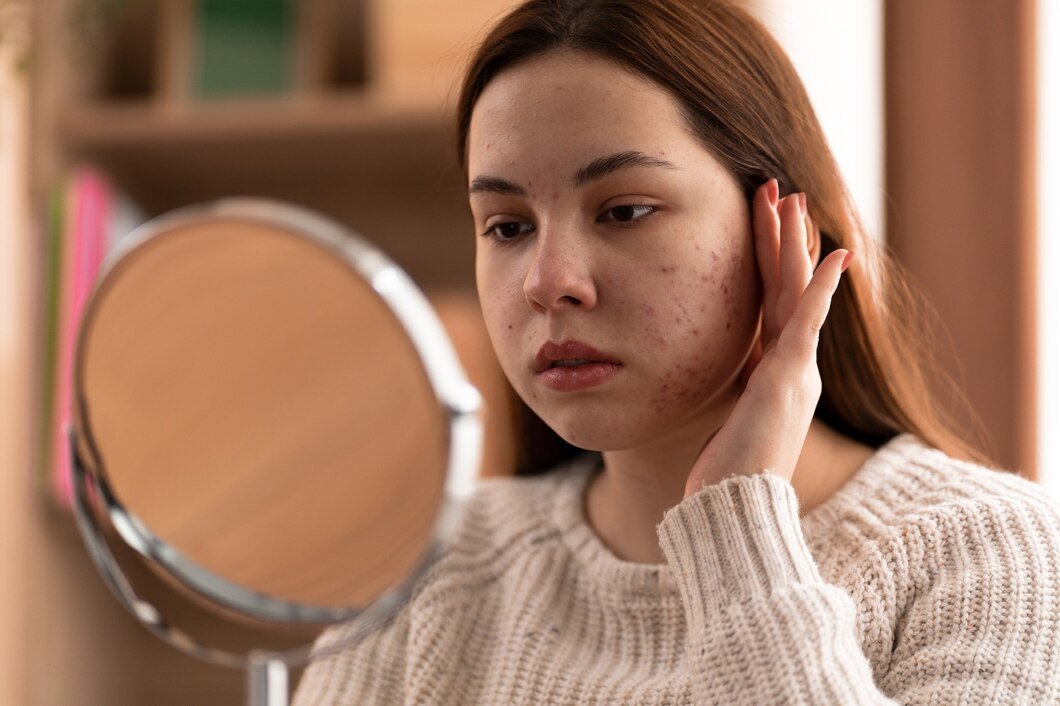
Blackheads, whiteheads, inflamed pimples, painful nodules and hormonal breakouts may coexist. Treatment depends on severity, skin sensitivity, pregnancy status, medicines, triggers and risk of scarring.
Blackheads, whiteheads and clogged pores may respond to appropriate home care, prescriptions or selected peels.
Red papules and pustules require inflammation control and avoidance of picking to reduce marks and scars.
Deep painful lesions carry higher scarring risk and need timely clinician-led medical assessment.
Jawline breakouts, irregular cycles, PCOS features, products and medicines may be relevant to the plan.
Back, chest and shoulder acne may need different cleansing, topical or medical strategies.
Barrier damage, acne marks, enlarged-looking pores, irritation and overuse of actives can overlap and require a gentler, diagnosis-led approach.
Scar depth, tethering, edge shape, pigmentation, active acne and skin type determine which procedure—or combination—is worth discussing.
Small deep tracts may require focal approaches rather than only surface resurfacing.
Round or oval depressions with sharper borders vary from shallow to deep.
Broad undulations often involve fibrous attachments beneath the skin.
Raised scars require a different pathway; aggressive resurfacing can be inappropriate.
Post-acne redness and pigmentation are not the same as indented scars and may need tone-focused care.
Pores cannot be permanently erased, but oil control and selected procedures may improve their appearance.
Calling every post-acne spot a “scar” can lead to the wrong treatment. Examination under consistent lighting helps separate pigment, redness, depressions and raised tissue.
| Concern | How it appears | Common discussion | Main caution |
|---|---|---|---|
| Post-inflammatory pigmentation | Flat brown or grey marks | Sun protection, topical care, peels or selected devices | Over-aggressive treatment can worsen pigmentation |
| Post-acne redness | Flat pink or red marks | Time, inflammation control and selected vascular/light options | Not every red mark needs a procedure |
| Atrophic scars | Indented ice-pick, boxcar or rolling scars | Subcision, CROSS, microneedling, laser or combinations | One procedure rarely treats every scar type |
| Raised scars | Firm elevated tissue | Scar-directed medical procedures | Resurfacing alone may worsen the problem |
| Open pores | Visible follicular openings and uneven texture | Oil control, resurfacing or collagen-induction options | Permanent pore removal is unrealistic |
Active acne may need medical control before procedures. Darker skin tones require conservative settings and careful aftercare to reduce post-inflammatory pigmentation risk.
Common acne-scar procedures include fractional CO2 laser for acne scars, MNRF treatment, microneedling for acne scars, subcision and TCA CROSS. The right combination depends on whether scars are ice-pick, boxcar, rolling, raised or mainly post-acne marks and open pores.
Mixed scar patterns: Ask which areas are indented, tethered, raised or mainly flat colour changes. Different areas may call for different considerations.
Procedure choice: Discuss scar pattern and depth, active acne, skin type and pigmentation tendency, previous treatment and the clinician's assessment.
Combination or staged planning: Different approaches may sometimes be considered or staged; response can be reviewed before further treatment. A combination is not needed for everyone.
Recovery planning: Ask about visible redness or swelling, crusting or flaking where relevant, aftercare, social downtime and possible pigmentation changes with the proposed procedure.
If you are prone to post-inflammatory hyperpigmentation, discuss your pigmentation tendency, previous pigment response, skin tone, proposed procedure and aftercare.
Not every treatment suits every scar. A clinician needs to assess your skin before recommending a procedure or treatment sequence.
Clinician-directed topical or oral treatment may be considered according to severity, contraindications and pregnancy status.
Superficial or targeted chemical peels may support acne, oiliness, post-acne marks and pigmentation when correctly selected.
Microneedling for acne scars creates controlled microchannels that may improve selected shallow scars, open-looking pores and uneven texture over a planned series.
Subcision for acne scars is a minor procedure used to release fibrous bands beneath selected rolling or tethered scars and may be combined with other scar-remodelling procedures.
TCA CROSS uses precise focal acid placement in selected deep narrow or ice-pick scars and is different from a full-face chemical peel.
Fractional CO2 laser treatment may be considered for selected boxcar scars, acne-scar texture and photo-damaged skin, with planned downtime, aftercare and pigmentation-risk assessment.
MNRF treatment, also called RF microneedling, combines microneedles with radiofrequency energy and may be discussed for acne scars, open pores, uneven texture and selected skin-tightening concerns.
A controlled mechanical exfoliation option for selected superficial texture concerns—not deep scars.
Subcision, CROSS, collagen induction and resurfacing may be sequenced because different scars respond differently.
Only clinic-owned @transformance.india posts that are loading correctly on this page are shown below. Broken or unavailable Instagram posts have been removed.
Official Transformance procedure content for acne scars, pores and uneven texture.
Open on @transformance.india →Official Transformance acne, pores and texture case content.
Open on @transformance.india →Official Transformance microneedling / acne-scar procedure content.
Open on @transformance.india →Official Transformance acne-scar treatment and improvement content.
Open on @transformance.india →Official Transformance pores, congestion and acne-care content.
Open on @transformance.india →Our approach to Acne Scar Treatment in Hyderabad is usually staged. Changing procedures too quickly or treating active acne aggressively can increase irritation and pigmentation.
Breakout type, severity, triggers, products, medicines and scarring risk are reviewed.
Inflammation and new lesions are stabilised before intensive scar correction.
Ice-pick, boxcar, rolling, raised scars, marks and pores are documented.
Photographs, downtime, pigment response and improvement guide the next session.
There is no single best treatment. Ice-pick, boxcar, rolling and raised scars require different procedures, and many patients need a staged combination.
Scars can often be improved but complete removal is unrealistic. Final response depends on type, depth, skin tone, healing and treatment plan.
Usually yes. Ongoing breakouts can create new scars and may increase risk during aggressive procedures.
No. Flat red or brown marks are colour changes, while atrophic scars are indented and hypertrophic scars are raised.
Subcision is a minor procedure used to release fibrous attachments beneath selected rolling or tethered scars.
It is a focal technique in which high-strength acid is placed precisely into selected deep narrow scars to encourage remodelling.
It may improve selected shallow scars, pores and texture over multiple sessions, but it is not suitable for every scar type.
Selected lasers may be used cautiously, but settings, skin type, sun exposure and aftercare matter because pigmentation risk can be higher.
The number varies with scar type, depth, treatment combination, downtime tolerance and individual response. A fixed number cannot be promised.
No. Pores are normal anatomical structures. Their appearance may improve with oil control, collagen-induction or resurfacing procedures.
Hormonal factors, PCOS, products, stress, medicines, friction and genetic tendency may contribute. Several causes can overlap.
Peels can help selected active acne and pigmentation, but superficial peels do not correct deep tethered scars.
Cost depends on scar types, procedures, number of sessions, combination treatment and follow-up. Assessment is required for an exact estimate.
Downtime ranges from minimal redness to several days or longer depending on the procedure, intensity and individual healing.
Use these Transformance treatment pages to compare acne-scar procedures with pigmentation, resurfacing, anti-ageing and other skin-care pathways.
Explore the complete Transformance skin-treatment hub.
Compare resurfacing, microneedling, MNRF and glow procedures.
Review dark spots, post-acne marks, melasma and brightening options.
Explore face and body laser hair reduction at Transformance.
Compare skin tightening, HIFU, skin boosters and facial aesthetics.
Explore brows, lips and selected semi-permanent cosmetic treatments.
Send your details and our clinic team will contact you. Final diagnosis, procedure selection and quotation are confirmed after assessment.
Explore treatment availability and clinic details at your preferred Transformance location.