Pattern
Hairline recession, crown thinning, widening part line, diffuse shedding or sharply defined patches are documented.
Review hair-transplant candidacy for pattern loss →Looking for hair fall treatment, hair loss treatment, dandruff treatment or scalp treatment in Hyderabad? Transformance provides assessment-led care for excessive hair fall, sudden shedding, hair thinning, receding hairline, crown thinning, male and female pattern hair loss, postpartum hair fall, alopecia, itchy scalp, oily scalp, dry scalp and recurring dandruff at Madhapur and Dilsukhnagar.
Daily shedding, progressive thinning, patchy loss, scalp inflammation and hair breakage need different pathways. A webpage cannot diagnose the condition; these categories help you prepare for consultation.
Hairline recession, crown thinning, widening part line, diffuse shedding or sharply defined patches are documented.
Review hair-transplant candidacy for pattern loss →Sudden or gradual onset, duration, seasonal change, pregnancy, illness, stress and recent procedures are reviewed.
Start an AI hair and scalp assessment →Scaling, redness, itching, pain, pustules, excessive oil, scarring or broken hairs can change the treatment plan.
Explore clinical hair and scalp services →Thyroid concerns, PCOS, anaemia risk, medicines, weight change and family history may be relevant.
Compare PRP, GFC and exosome treatments →Heat, chemical processing, tight hairstyles, extensions, friction and grooming-related breakage are considered.
See personalised hair-care treatment options →Consistent photographs or measurements help distinguish real improvement from day-to-day variation.
People may search for “hair fall solution,” “hair loss treatment,” “hair regrowth treatment,” “best treatment for hair fall,” “hair thinning treatment,” or “dandruff treatment.” The correct pathway depends on the pattern, duration, scalp findings and possible triggers.
Sudden heavy shedding, hair coming out during washing or combing, or a clear increase in daily hair fall may follow illness, stress, weight change, childbirth, deficiency risk or other triggers.
Reduced density, scalp visibility, widening part lines or gradual thinning may be related to pattern hair loss or other causes and should be staged before choosing treatment.
A receding hairline or temple thinning can be an early sign of pattern hair loss. Treatment may involve long-term medical care, regenerative support or transplant planning in selected cases.
Explore hair transplant for stable hairline loss →Crown thinning can progress slowly and may become more visible under bright light. Early assessment helps determine whether existing follicles can be supported.
Female hair loss may involve pattern thinning, postpartum shedding, thyroid issues, PCOS, deficiency risk, stress, medicines or several overlapping factors.
Temple recession, frontal thinning and crown loss may fit male pattern baldness. A long-term plan can combine preservation of existing hair with restoration when appropriate.
Increased shedding after childbirth is common, but severity, duration, breastfeeding status and other symptoms influence what can be safely recommended.
Recurring flakes, scalp itching, oiliness, redness and irritation may reflect dandruff, seborrhoeic dermatitis or another scalp condition that needs targeted care.
Round bald patches, eyebrow involvement, broken hairs, scaling or smooth shiny areas should not be self-diagnosed because causes range from alopecia areata to fungal or scarring disorders.
Several conditions can look similar. Treatment names should not replace an examination, especially when hair loss is rapid, painful, patchy or associated with scalp inflammation.
Often appears as a receding hairline, crown thinning or widening central part. Medical and procedure-based options may be discussed after staging.
Diffuse shedding may follow illness, fever, surgery, major stress, nutritional change, rapid weight loss or childbirth.
Flaking, itching, redness and oily scale may require scalp-directed care before regrowth procedures are considered.
Smooth round or oval patches require medical evaluation. Treatment depends on extent, activity and associated findings.
Tight hairstyles, chemical damage, heat and friction can cause breakage or traction-related loss. Early change may prevent progression.
Pain, burning, loss of follicular openings, pustules or permanent smooth areas need prompt dermatologist-led evaluation to protect remaining follicles.
Dandruff can recur. The goal is usually control rather than a permanent one-time cure. Severe or unusual scaling may be caused by conditions other than routine dandruff.
Not every option suits every patient. Pregnancy, medical history, age, diagnosis, scalp condition, expected benefit and willingness for maintenance all matter. For procedure choices, compare PRP, GFC and QR678 options after an assessment.
Clinician-recommended scalp or hair-loss applications may be discussed according to diagnosis, tolerance and long-term plan.
Review diagnosis-led hair treatments →Selected patients may be assessed for prescription treatment after contraindications, risks, monitoring and alternatives are discussed.
Medicated cleansing, anti-inflammatory or antifungal approaches may be selected according to examination findings.
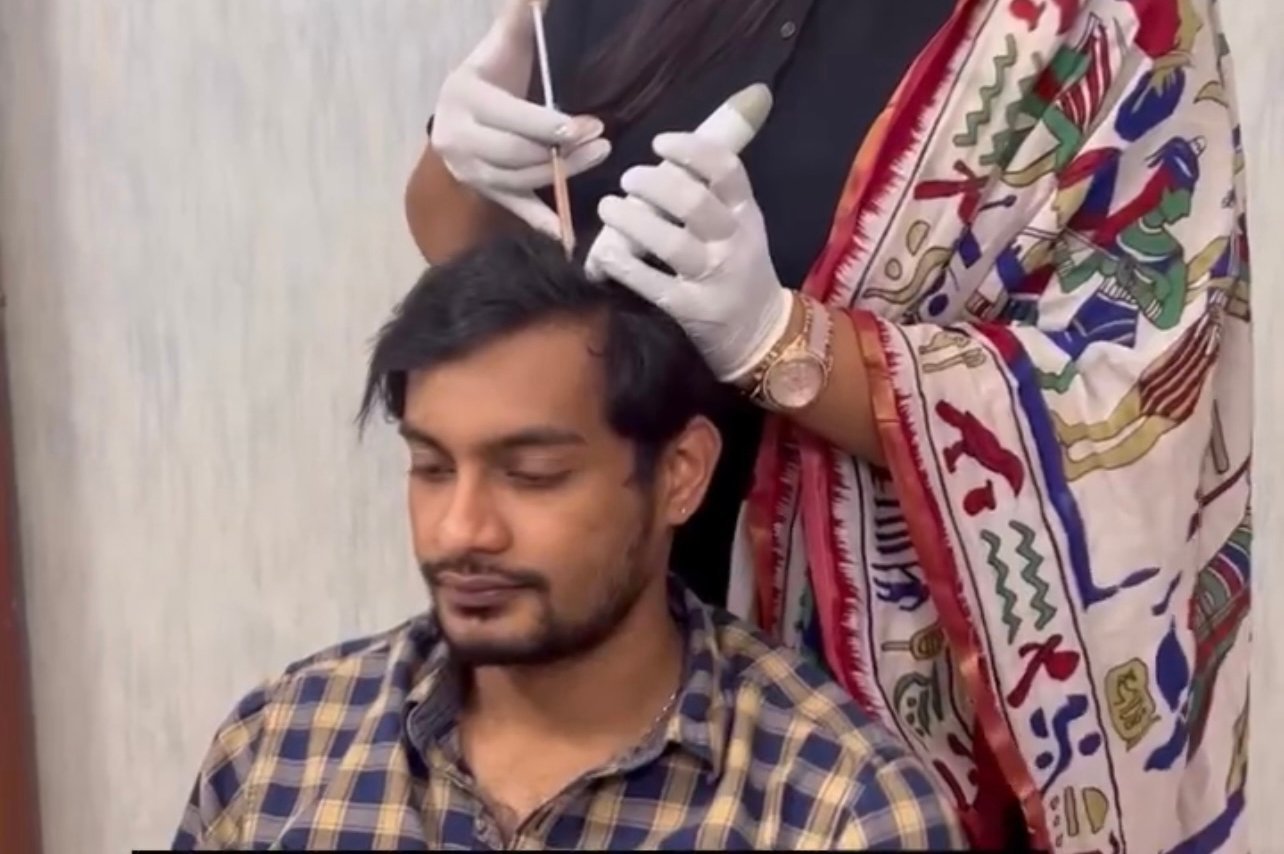
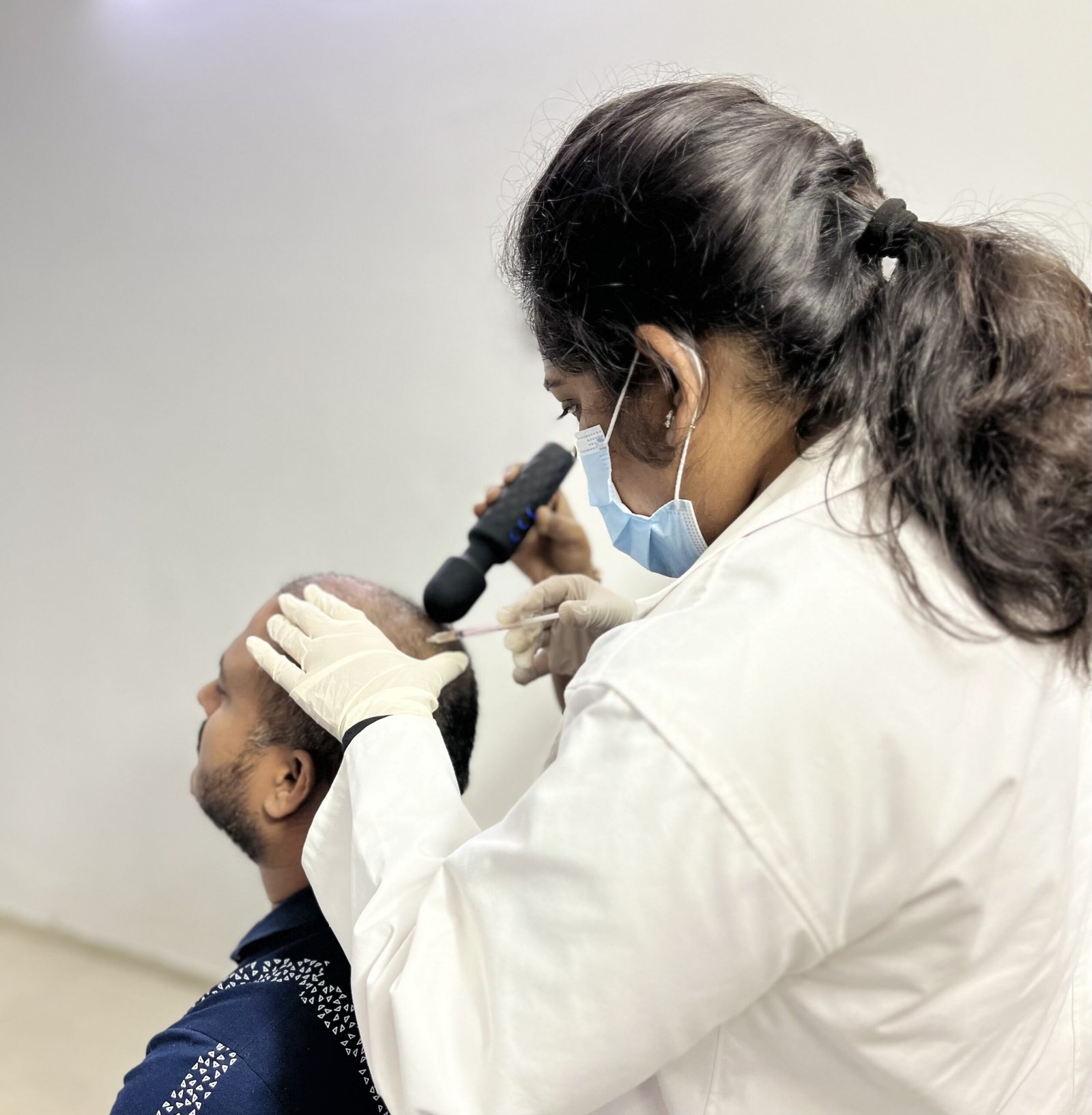
Autologous blood-derived procedures may support selected non-scarring hair-loss plans but do not replace diagnosis or revive destroyed follicles.
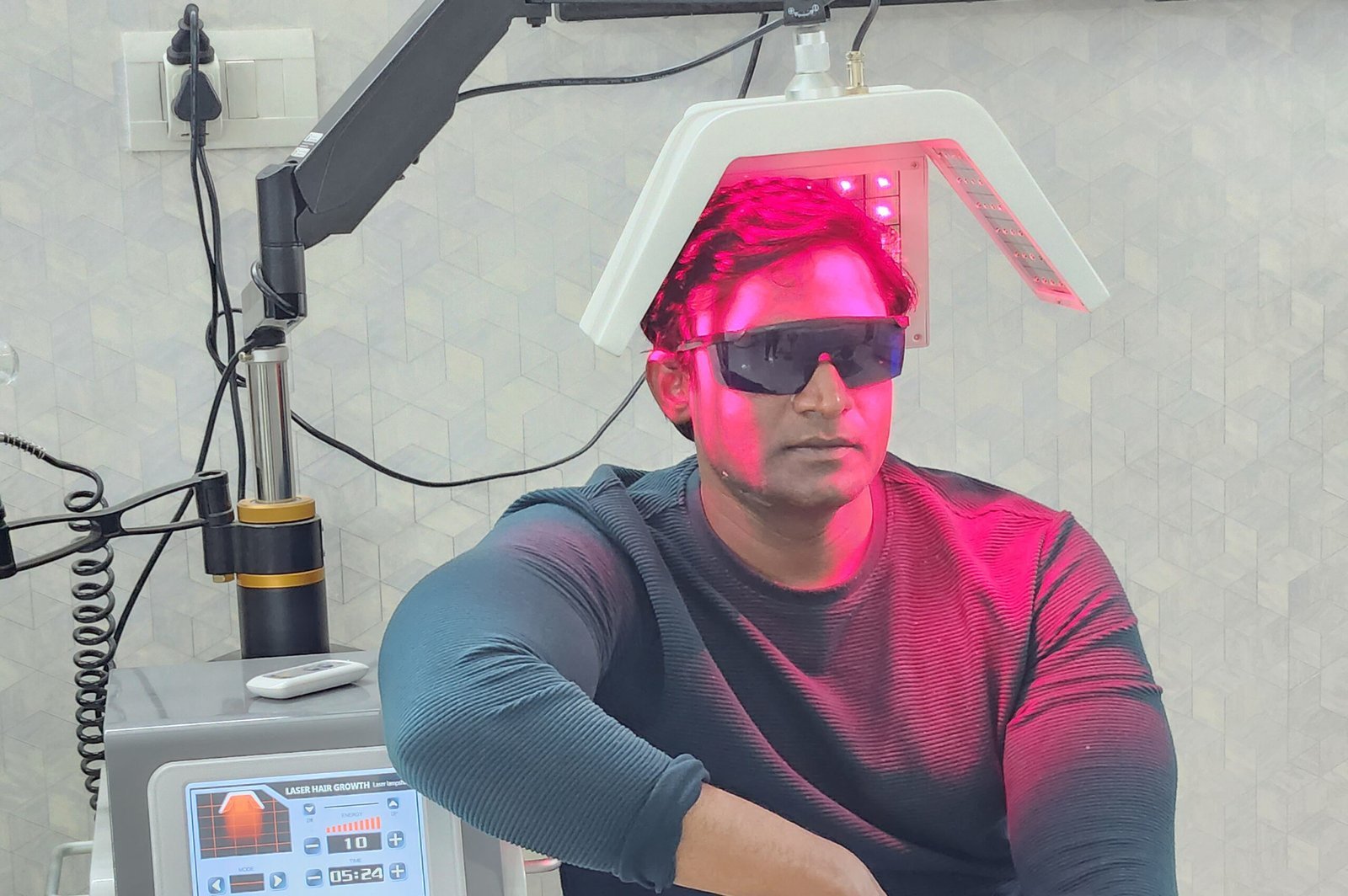
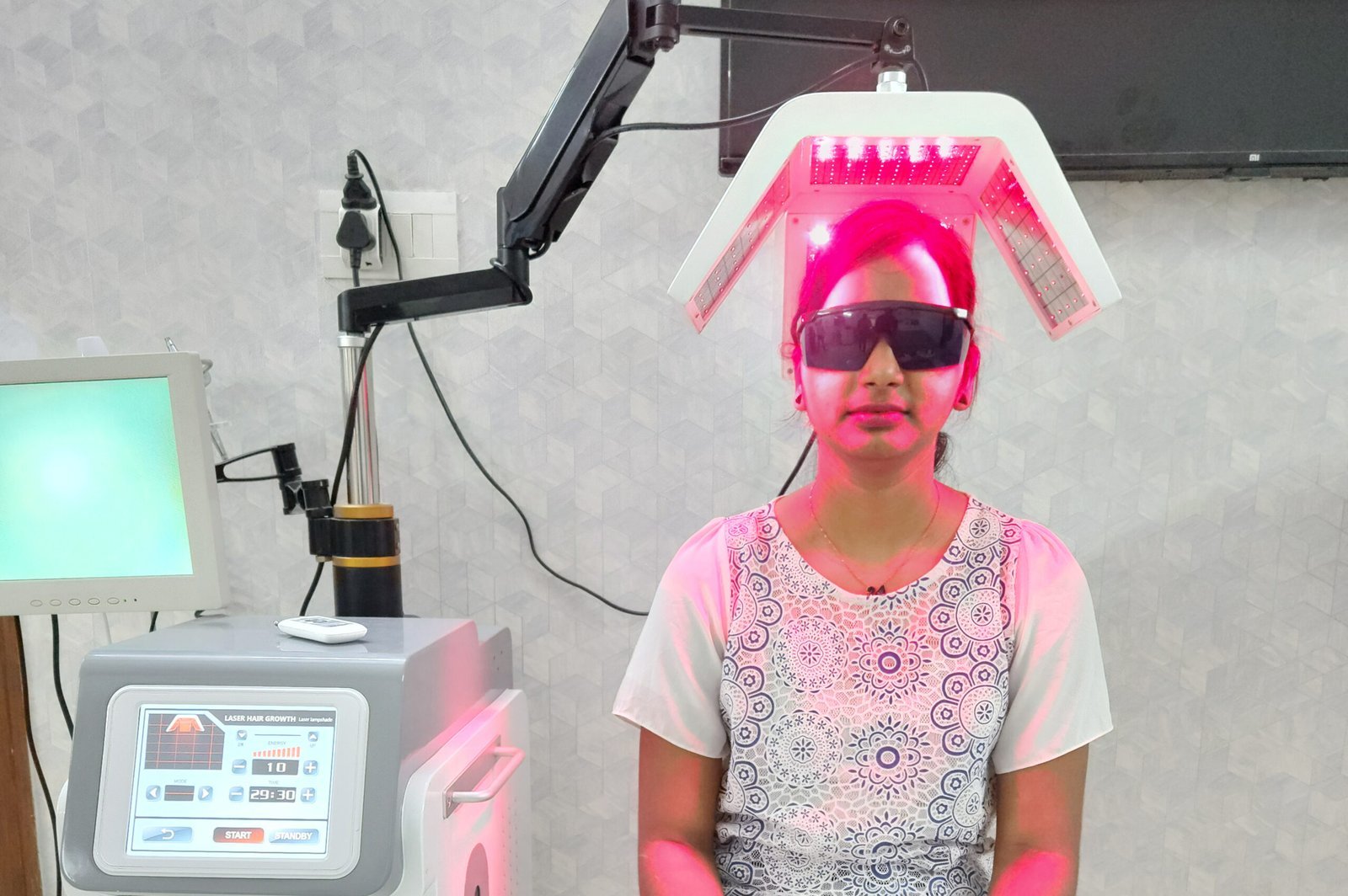
Learn about PRP and GFC for hair loss →Low-level light treatment may be considered for selected pattern hair loss and generally requires repeated use over months.
Compare hair-fall control and cosmetic density →Iron, vitamin or nutrient replacement should be based on history and appropriate assessment—not automatically given to every patient.
Alopecia areata pathways depend on age, extent, activity and medical evaluation. No single treatment suits all cases.
Medical care, scalp control, procedures and devices may be staged when clinically appropriate and reviewed with objective photographs.
Hair transplantation is a separate option for suitable patients with stable loss and adequate donor hair; it is not a treatment for every cause.
Understand hair-transplant cost and graft planning →Exosome-based hair approaches may be discussed for selected hair-thinning concerns after assessment. Suitability and expectations should be reviewed carefully.
Compare PRP, GFC & exosome hair treatment →QR678 may be considered for selected thinning concerns as part of a structured hair-regrowth plan after diagnosis and scalp assessment.
Hair-supportive IV or nutritional drip pathways may be considered only where clinically appropriate. They are not a substitute for identifying and treating the cause of hair loss.
Hair-thread based approaches may be discussed for selected cases as part of a broader hair-care plan after suitability assessment.
Widening part lines and diffuse shedding may involve pattern loss, iron deficiency risk, thyroid concerns, PCOS, postpartum changes, stress, illness, medicines or overlapping causes.
| What we review | Why it matters | Possible next step |
|---|---|---|
| Pattern and density | Helps distinguish central thinning, diffuse shedding, breakage or patchy loss. | Scalp examination and baseline photographs |
| Cycle and hormonal history | Irregular periods, acne or unwanted facial hair may be relevant to PCOS assessment. | Appropriate medical referral or investigation when indicated |
| Pregnancy and postpartum period | Some shedding patterns and treatment choices change during pregnancy or breastfeeding. | Conservative, medically appropriate planning |
| Diet and deficiency risk | Restriction, heavy periods or rapid weight loss can increase deficiency risk. | Targeted tests or nutrition support when appropriate |
| Styling and chemical history | Tension, extensions, straightening and bleaching can contribute to loss or breakage. | Damage reduction and scalp/hair-care changes |
Alopecia simply means hair loss; it is not one disease. Alopecia areata, traction alopecia, fungal infection and scarring disorders require different treatment.
Patch shape, scaling, broken hairs, redness and follicular openings are reviewed.
Non-scarring versus potentially scarring loss is considered.
Tests, dermoscopy or referral may be advised when clinically indicated.
Response and progression are monitored instead of promising a fixed result.
These are clinic procedure photographs, not guaranteed outcomes. Results vary with diagnosis, follicle viability, consistency and individual response.
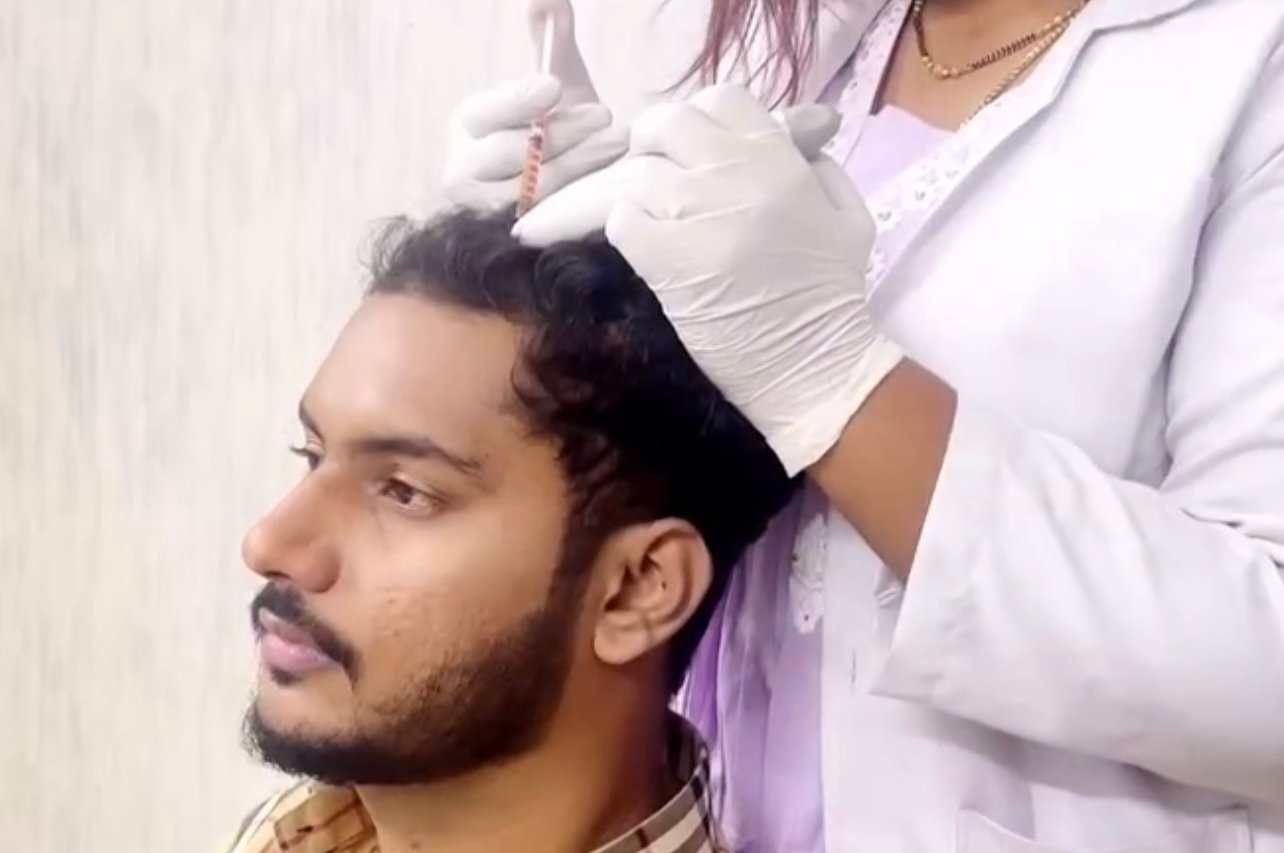
Hair growth cycles are slow. A sensible plan reviews shedding, scalp health, density and photographs over an appropriate period instead of changing treatments every few weeks.
Share onset, pattern, symptoms, family history and previous treatments.
Hair, scalp, medical history and possible triggers are reviewed.
Medical, scalp-care, device or procedure options are discussed.
Photographs, tolerance, adherence and progression guide the next step.
Daily shedding varies. A noticeable increase, reduced density, widening part line, receding hairline or persistent shedding deserves assessment rather than relying only on a hair count.
Illness, fever, surgery, childbirth, rapid weight loss, major stress, deficiency risk, thyroid problems, medicines and other triggers may contribute. More than one factor can coexist.
Dandruff itself does not usually destroy follicles, but inflammation and scratching can increase shedding or breakage. Severe scaling may also represent another scalp condition.
Dandruff often recurs and is commonly managed with an initial control phase followed by maintenance. The plan depends on severity and diagnosis.
There is no single best treatment. Pattern hair loss, telogen effluvium, alopecia areata, breakage and scarring disorders require different approaches.
No. They may be considered for selected non-scarring conditions but cannot replace diagnosis or restore follicles permanently destroyed by scarring.
Some deficiencies can contribute, but supplements are not automatically needed by everyone. History and appropriate testing should guide replacement.
It commonly appears as reduced density or widening of the central part, but other causes of female hair loss can look similar and should be considered.
Increased shedding can occur after childbirth, but severity, duration and other symptoms should be reviewed. Treatment choices also depend on breastfeeding and medical history.
PCOS may be associated with pattern hair thinning in some women, particularly with irregular periods, acne or unwanted facial hair. Medical assessment may be advised.
It is an immune-mediated condition that commonly causes smooth patchy hair loss. Extent and activity vary, so medical evaluation is needed.
It depends on the cause and whether follicles remain viable. Non-scarring conditions may regrow, while scarring hair loss can permanently damage follicles.
Shedding and growth cycles take months to assess. The timeframe varies by diagnosis, treatment, consistency and individual response.
Seek prompt assessment for rapid patchy loss, pain, burning, pus, bleeding, smooth shiny scalp areas, eyebrow loss or signs of infection.
There is no single best hair-fall treatment for everyone. The right plan depends on whether the problem is pattern hair loss, telogen effluvium, dandruff or dermatitis, alopecia areata, breakage, scarring loss or another condition.
Hair regrowth treatment depends on whether follicles remain active and on the cause of thinning. Options may include medical therapy, PRP, GFC, exosome-based approaches, QR678, light-based support or other treatments when clinically appropriate.
People often use this phrase for increased shedding. Possible triggers include illness, stress, childbirth, rapid weight change, deficiency risk, thyroid issues, medicines and pattern hair loss. Assessment is needed to distinguish them.
Major physical or emotional stress can contribute to diffuse shedding in some people, but persistent hair loss should not automatically be attributed to stress because other causes can coexist.
Thyroid disorders can be associated with hair changes in some people. Relevant symptoms and medical history may prompt appropriate testing or referral.
Oiliness alone does not explain every case of hair loss, but oily scalp can coexist with dandruff, seborrhoeic dermatitis and inflammation. Persistent symptoms should be examined.
Dandruff, dermatitis, psoriasis, allergy, fungal infection, inflammation and scratching-related breakage are among the possibilities. The scalp should be assessed if itching is persistent or severe.
It depends on the cause, duration and follicle activity. Early pattern hair loss may respond to preservation strategies, while established permanent loss may require restoration planning in selected patients.
No procedure should be described as a permanent cure for every type of hair loss. Suitability and maintenance needs vary according to diagnosis and ongoing hair-loss biology.
Send your details and our clinic team will contact you. Treatment recommendations are confirmed only after a clinician assesses you.
Explore treatment availability and clinic details at your preferred Transformance location.